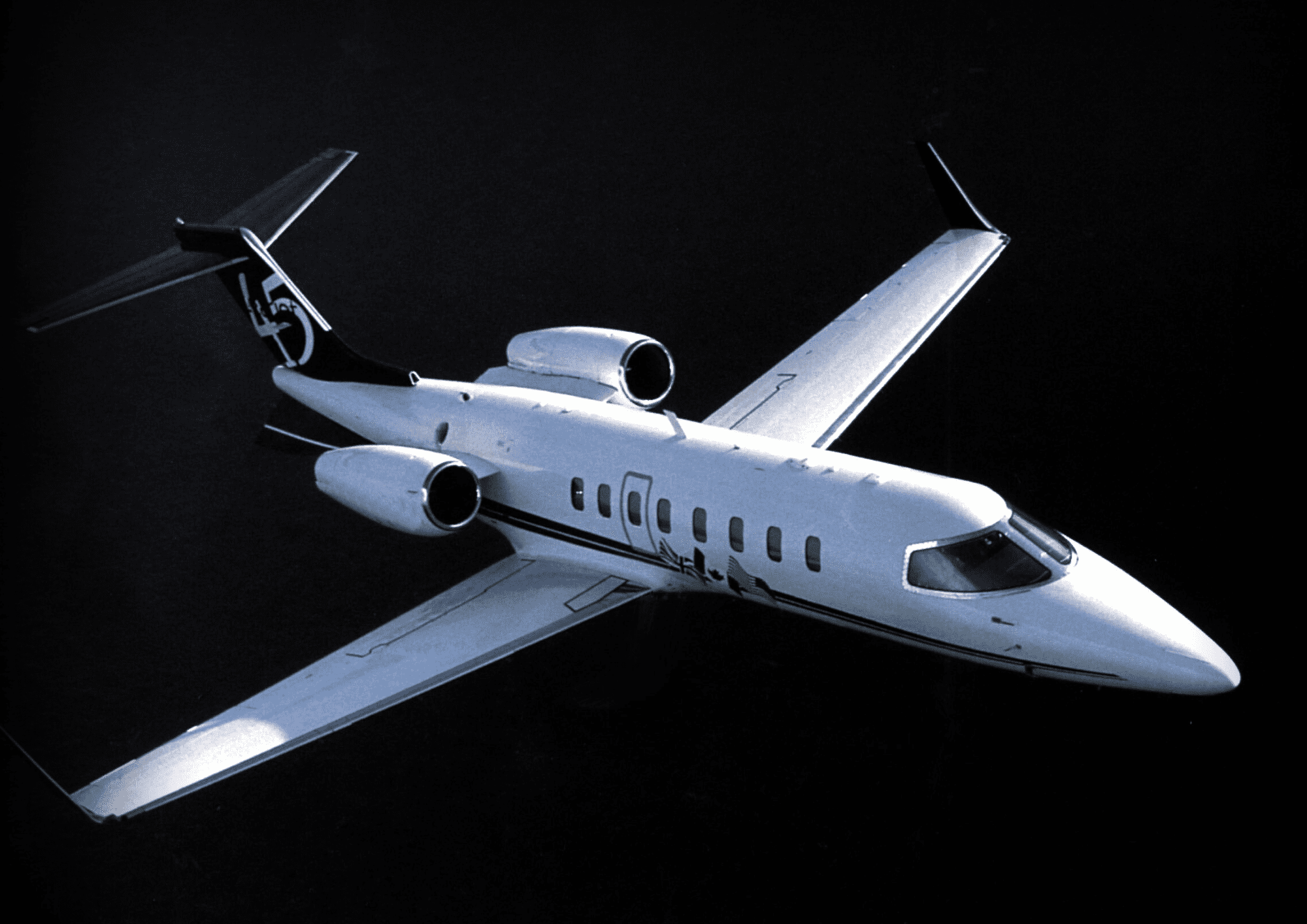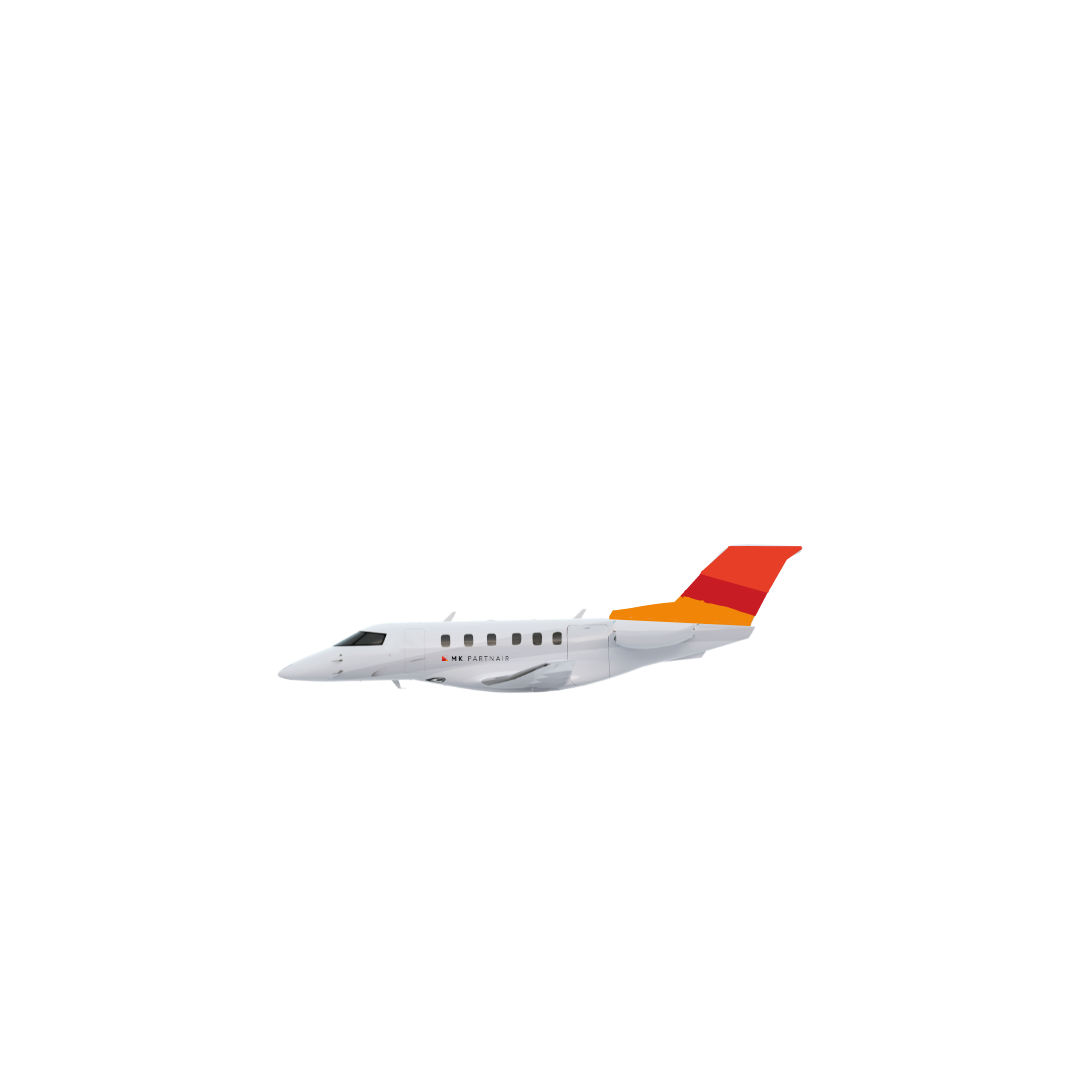



The Learjet. A name. A legend. Since 1963, Bombardier has built one of the strongest symbols in private aviation — a fast, sleek aircraft with a personality all its own. The Learjet 40 and the Learjet 45 are the last representatives of this lineage in the light jet segment, and they carry the brand’s heritage with pride.
At MK Partnair, we’ll give you the honest picture: the Learjet 40/45 is an excellent aircraft, but it faces a difficult market position in Europe today. Competition from the Phenom 300 and Citation XLS — often equally priced but offering a taller, wider cabin — makes the conversation complex. Those who choose it tend to do so for what it is: a connoisseur’s aircraft, fast, iconic, with a soul.
On board the Learjet 40 / 45 — The passenger experience
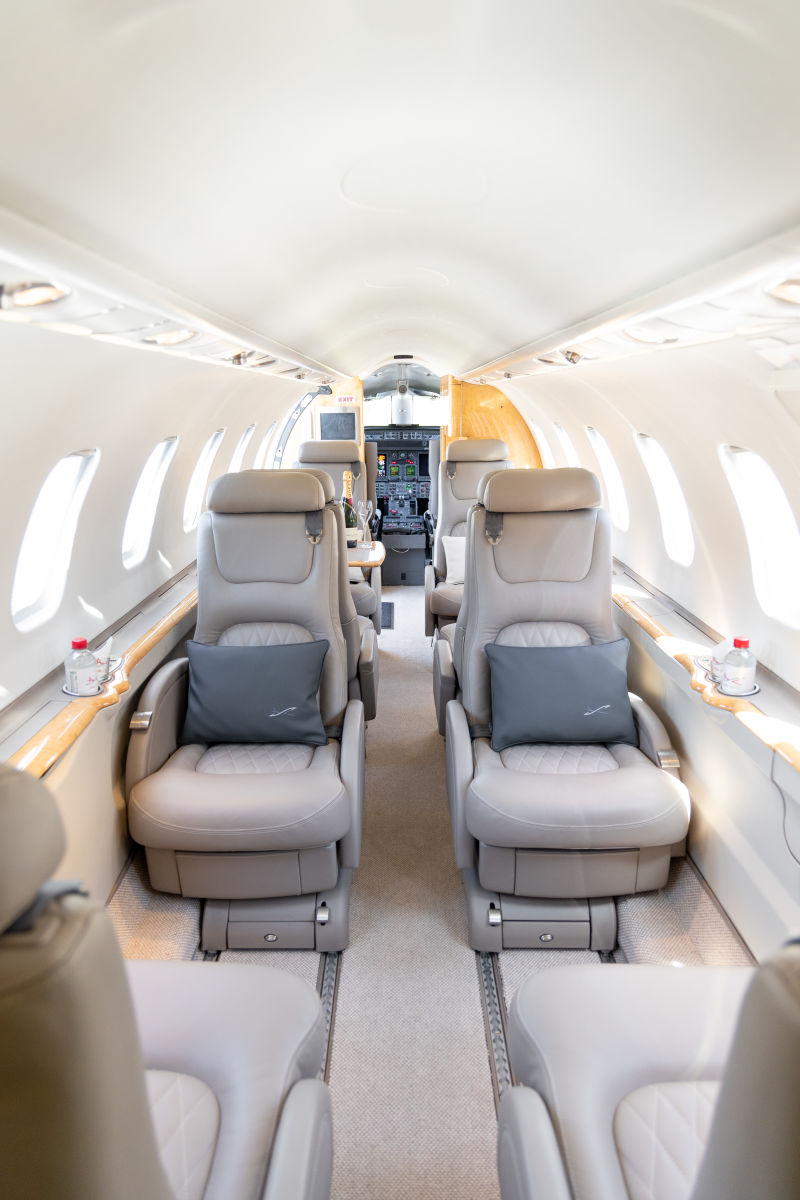
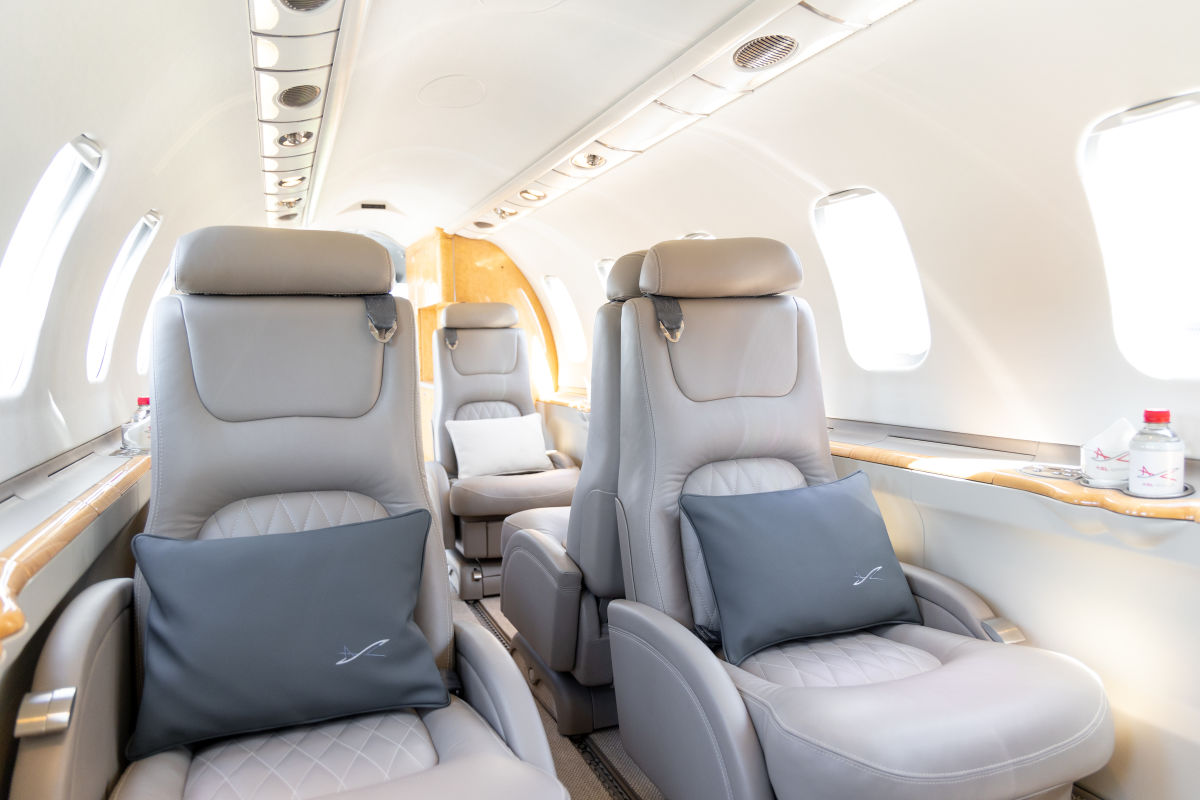
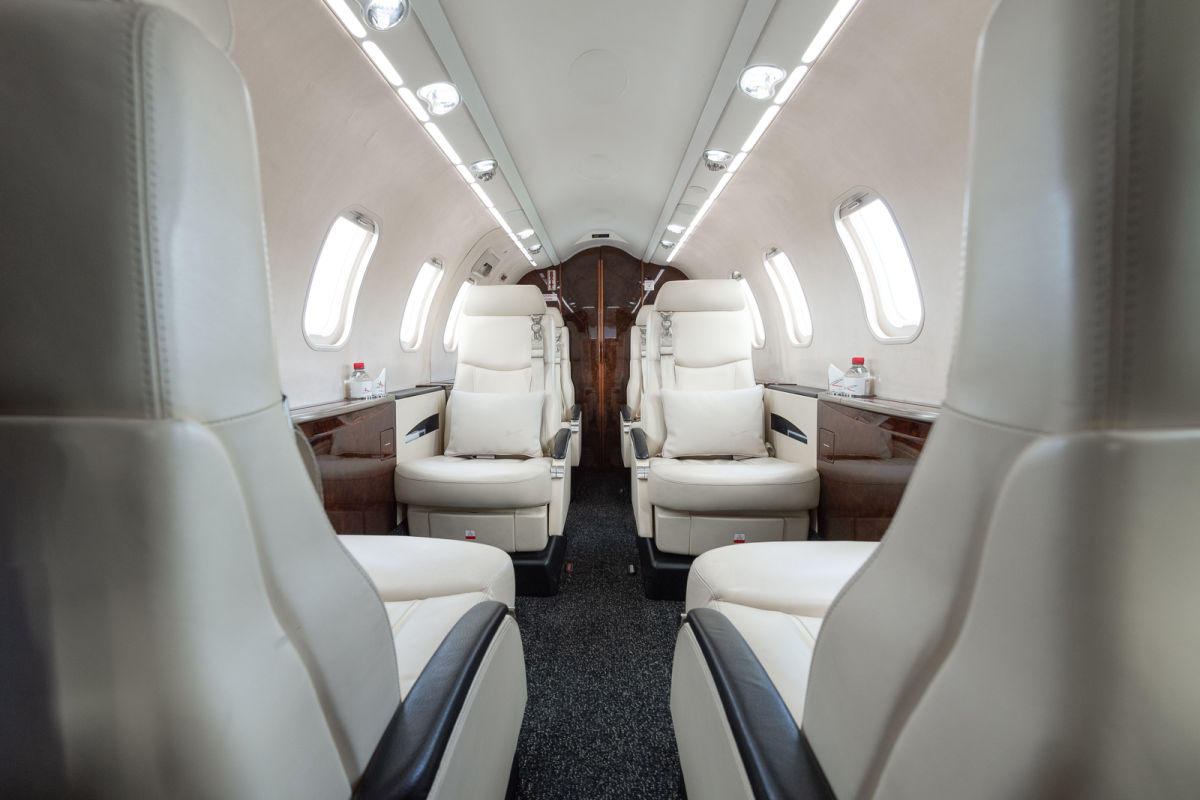
A narrow but characterful cabin
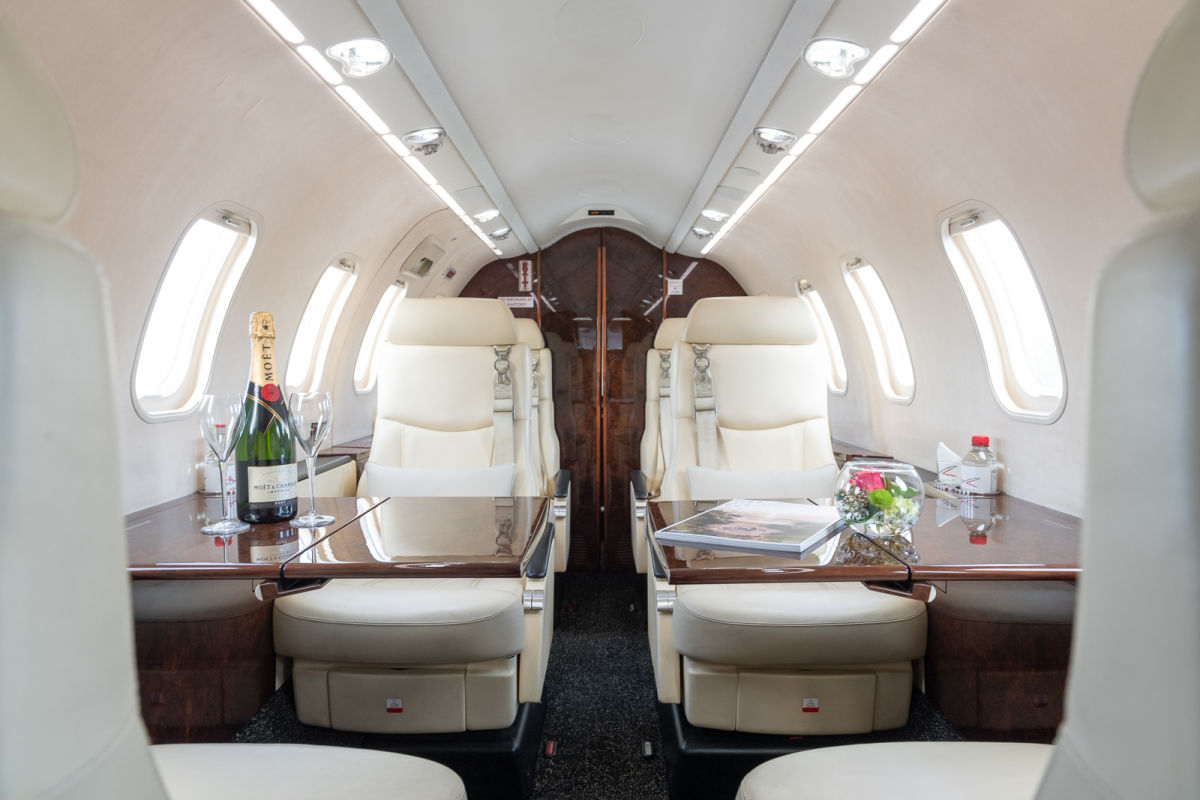
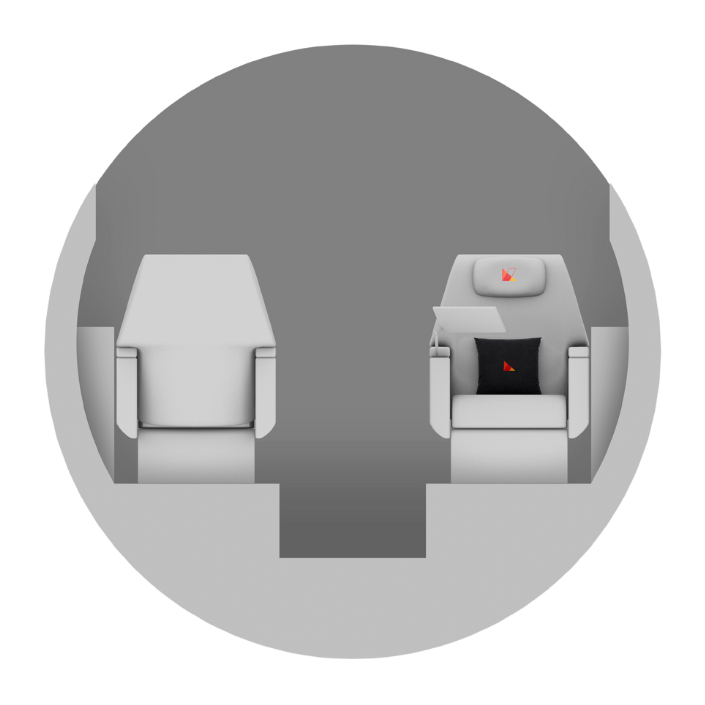
The Learjet is unlike anything else on board. Its cabin is narrower than a Phenom 300 or CJ3 — that’s a reality to accept going in. But it has a style, a finish, and a build quality that reminds you what Bombardier does best. The seats are well-designed, the materials premium, and at cruise speed the aircraft is remarkably quiet.
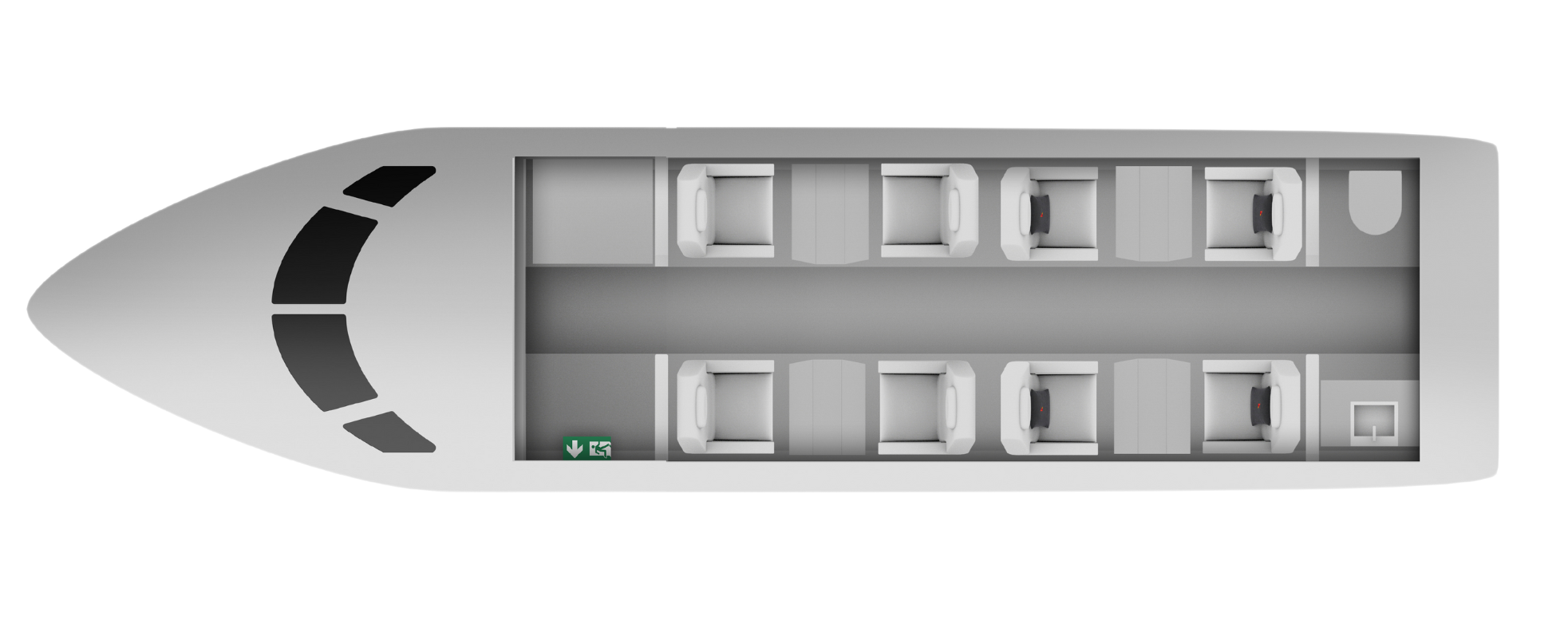
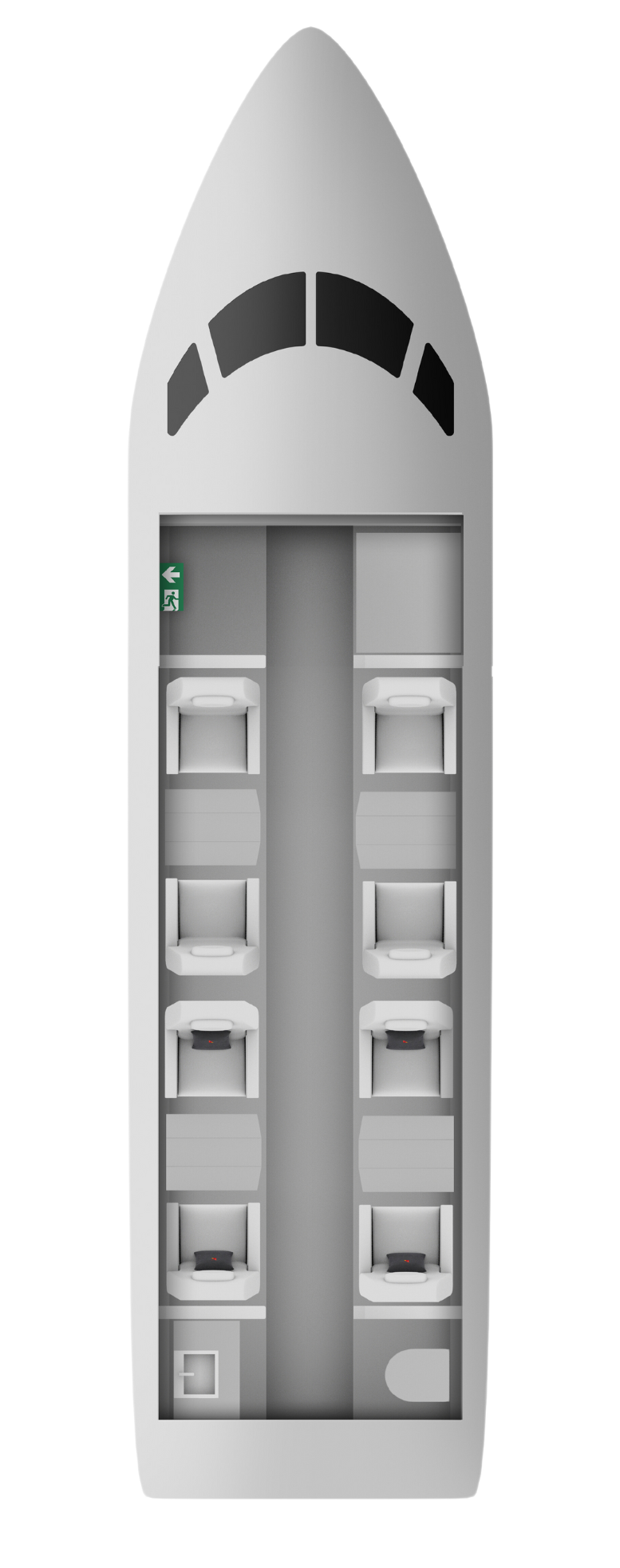
- Learjet 40: 6 to 7 seats — 4 club + 2 to 3 rear seats (including lavatory seat)
- Learjet 45: 7 to 8 seats — 60 cm longer cabin, more generous configuration
- Lavatory on board — both versions, with a proper private space
- Galley with refreshments and snacks
- Excellent soundproofing — one of the quietest cabins in the segment
- Premium finish — Bombardier build quality, quality materials throughout
- Distinctive oval windows — the brand’s visual signature
💡 MK Partnair’s take: Flying a Learjet is a bit like driving a sports car — you don’t choose it purely on paper specs. You choose it for what it represents, for the way it flies, for that particular feeling on board. Clients who request it usually already know it, and they come back. It’s not the most rational aircraft in the segment — but it has a soul that very few aircraft can match.
What you need to know
- Narrower cabin than its competitors — 1.49 m (LJ40) to 1.55 m (LJ45) width vs 1.55 m for the Phenom 300
- Cabin height: 1.46 m (LJ40) to 1.50 m (LJ45) — not full standing height
- Optimal configuration: 5 to 6 passengers
- Limited European availability — the European fleet is small
Learjet 40 vs Learjet 45 — The differences
| Specification | Learjet 40 | Learjet 45 |
|---|---|---|
| Capacity | 6–7 passengers | 7–8 passengers ✓ |
| Cabin length | 5.40 m | 6.03 m ✓ |
| Cabin width | 1.49 m | 1.55 m ✓ |
| Cabin height | 1.46 m | 1.50 m ✓ |
| Range | ~3,440 km (1,857 nm) | ~3,800 km (2,049 nm) ✓ |
| Cruise speed | 860 km/h (Mach 0.81) | 860 km/h (Mach 0.81) |
| Service ceiling | 51,000 ft ✓ | 51,000 ft ✓ |
| Engines | Honeywell TFE731-20AR | Honeywell TFE731-20 ✓ |
| Production | 2002–2009 | 1998–2013 |
For a passenger, the difference between the two is noticeable: the Learjet 45 is longer, slightly wider, and more comfortable for 7 to 8 passengers. When availability allows, we recommend the 45. Both share the same DNA, the same speed, and the exceptional 51,000 ft ceiling.
The market reality — Let’s be honest
The Learjet 40/45 is an excellent aircraft — but its charter market position in Europe is challenging. Here’s why:
| Criteria | Learjet 45 | Phenom 300 | Citation XLS |
|---|---|---|---|
| Cabin | Narrow | Wider ✓ | Taller ✓ |
| Speed | 860 km/h ✓ | 839 km/h | ~830 km/h |
| Service ceiling | 51,000 ft ✓ | 45,000 ft | 45,000 ft |
| Charter price | €€€ | €€€ | €€€ |
| European availability | ⭐⭐ | ⭐⭐⭐⭐⭐ | ⭐⭐⭐ |
| Image / Character | Iconic ✓ | Modern | Classic |
Our honest recommendation:
- Choose the Learjet if you’re a connoisseur, if speed and the 51,000 ft ceiling matter to you, and if the brand name is part of the experience you’re looking for. It’s an aircraft for people who know exactly what they want.
- Choose the Phenom 300 if you want a wider cabin, much better availability, and comparable pricing.
- Choose the Citation XLS if you want a taller, more airy cabin (1.73 m — almost standing height) at the same price point — that’s often the deciding criterion.
Performance and accessible destinations
Fast. Very fast.
This is where the Learjet wins without argument. Powered by 2 Honeywell TFE731 engines, the Learjet 40/45 reaches 860 km/h (Mach 0.81) — among the fastest in the entire light jet segment — and climbs to 51,000 ft, above virtually all commercial traffic and weather systems. On a 2-hour flight, it gains 10 to 15 minutes over a Phenom 300. For some clients, that margin changes everything.
Sample routes from Paris
| Destination | Flight time | Recommended airport |
|---|---|---|
| Geneva | ~45 min | Geneva-Cointrin |
| Nice | ~1h | Nice Côte d’Azur |
| London | ~50 min | Farnborough, Biggin Hill |
| Barcelona | ~1h15 | El Prat or Sabadell |
| Milan | ~1h05 | Linate |
| Ibiza | ~1h30 | Ibiza Airport |
| Lisbon | ~2h | Humberto Delgado |
| Marrakech | ~2h20 | Marrakech-Menara |
How much does it cost to charter a Learjet 40 / 45?
The Honeywell TFE731 engines carry higher maintenance costs than the Williams FJ44 engines found in the Phenom 300 or the Citations. This is reflected in the charter rate — the Learjet is generally positioned at the same price level as the Phenom 300, sometimes above. At that price point, some clients choose the Citation XLS instead — a taller cabin at the same cost. Here are indicative one-way ranges:
| Route | Indicative price (one-way) |
|---|---|
| Paris → Geneva | €9,000 – €12,500 |
| Paris → Nice | €10,500 – €14,000 |
| Paris → London | €10,000 – €13,500 |
| Paris → Barcelona | €12,000 – €16,000 |
| Paris → Ibiza | €15,000 – €20,000 |
*Net prices, including airport taxes and crew. Variable based on availability and aircraft positioning.*
Frequently asked questions — Learjet 40 / 45 charter
What is the difference between the Learjet 40 and the Learjet 45?
The Learjet 45 is the longer version — 60 cm more cabin length, slightly wider (1.55 m vs 1.49 m), capacity of 7 to 8 passengers vs 6 to 7, and greater range (~3,800 km vs ~3,440 km). Both share the same speed and the 51,000 ft ceiling. When availability allows, the Learjet 45 is preferable for groups of 5 or more.
Why does the Learjet cost more to operate?
The main reason is the Honeywell TFE731 engines, which carry higher maintenance costs than the Williams FJ44 engines found in competing aircraft. This factor explains the charter rates generally sitting at the higher end of the light jet segment.
Is the Learjet really faster than its competitors?
Yes — at 860 km/h (Mach 0.81) and a 51,000 ft ceiling, the Learjet is one of the fastest aircraft in the entire light jet segment. On a Paris–Nice flight it gains around 10 minutes over a Phenom 300. On Paris–Marrakech, the gap is more significant.
Why do some clients prefer the Citation XLS instead?
The Citation XLS offers a taller cabin (1.73 m — almost full standing height) and wider interior at the same price point. For a group with no particular attachment to the Learjet brand, the Citation XLS is often the more pragmatic choice on perceived comfort.
Who chooses the Learjet today?
Connoisseurs. Clients who have flown in a Learjet before and want to again. Those for whom speed and the 51,000 ft ceiling genuinely matter. And those for whom the Learjet name means something. It’s not an aircraft for everyone — and that’s precisely what makes it special.
Book your Learjet with MK Partnair
Since 2012, MK Partnair has been helping clients charter private jets across France and Europe. Our approach:
- ✅ Free quote within 2 hours
- ✅ Net prices, no surprises
- ✅ Access to a worldwide fleet
- ✅ Dedicated advisor 24/7
If you want a Learjet, we’ll find one. And if we think another aircraft is a better fit for your mission and budget, we’ll tell you straight.