


French ticket tax (TSBA) on private jets: everything you need to know in 2026 10/18/2026
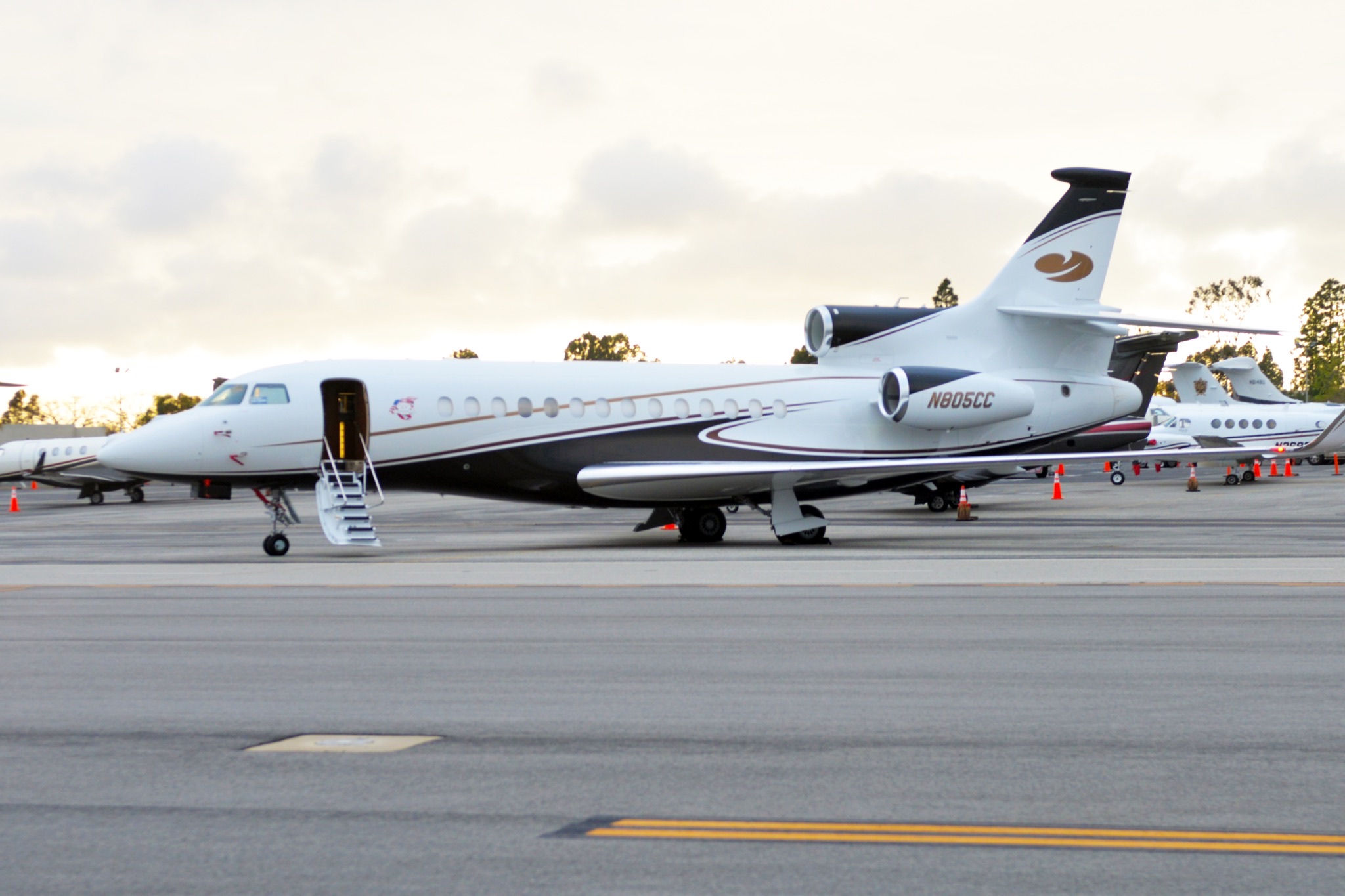
Since 1 March 2025, France’s air ticket solidarity tax, known as the TSBA, is no longer a minor line on a private jet invoice. It can add several thousand euros to a single flight. Here is how it works, what it costs and how to plan for it.
What is the TSBA?
The TSBA is a French tax charged for every passenger boarding a commercial flight departing from France. Introduced in 2006 to fund development aid, its official name is now the “solidarity tariff of the tax on air passenger transport”.
The 2025 French budget raised it sharply and, for the first time, created a specific rate for business aviation, far higher than for airline flights. The 2026 budget kept the same amounts.
Who has to pay it?
The business aviation TSBA applies when three conditions are met:
- the flight is commercial: it is operated by an airline and sold to the client, which is the case for any private jet charter;
- the aircraft has 19 passenger seats or fewer, which covers almost all business jets and turboprops;
- the passenger boards in France (mainland France, Corsica and the French overseas departments).
Flights an owner makes in their own aircraft, for their own purposes, are not commercial flights and are not subject to this tax.
How much is the TSBA on a private jet?
The amount depends on two things: the type of aircraft and the passenger’s final destination.
| Destination | Turboprop (propeller aircraft, e.g. Pilatus PC-12) | Jet (e.g. Phenom 300, Global 6000) |
|---|---|---|
| France, Europe and equivalent | €210 | €420 |
| Intermediate destination (1,000 to 5,500 km) | €675 | €1,015 |
| Long-haul destination (over 5,500 km) | €1,025 | €2,100 |
Amounts per passenger, in force since 1 March 2025 (source: official notice from the French Ministry of Ecological Transition, January 2026).
For comparison, an economy passenger on an airline flight pays €7.40 within Europe, and €30 in business class.
Which zone is my destination in?
The distance is not the length of your flight. It is measured between Paris-Charles de Gaulle airport and the main airport of the capital city of the destination country.
- Europe and equivalent: France, European Union countries, Switzerland, Norway, Iceland, Liechtenstein, as well as the United Kingdom, Monaco, Andorra and San Marino.
- Intermediate: for example Morocco, Tunisia, Turkey, Israel or the United Arab Emirates (the distance is measured to Abu Dhabi, the capital).
- Long-haul: for example the United States, the non-French Caribbean, Asia.
Worked examples
| Flight | Aircraft | Passengers | Total TSBA |
|---|---|---|---|
| Lyon-Bron → Calvi | Pilatus PC-12 (turboprop) | 4 | 4 × €210 = €840 |
| Paris → Nice | Light jet | 4 | 4 × €420 = €1,680 |
| Paris → Marrakech | Midsize jet | 6 | 6 × €1,015 = €6,090 |
| Paris → Dubai | Long-range jet | 8 | 8 × €1,015 = €8,120 |
| Paris → New York | Global 6000 | 8 | 8 × €2,100 = €16,800 |
On a one-way Paris–Nice flight, the TSBA therefore adds roughly 10 to 15% to the price of the flight.
When the TSBA does not apply
- The return flight to France: the tax only applies to departures from France. A Geneva–Paris or London–Nice flight is not subject to the French TSBA.
- Empty flights (positioning flights or empty legs without passengers): no passengers, no tax.
- Children under 2 and crew members.
- Connecting passengers, under the rules of the tax.
- Emergency medical evacuation flights.
- Departures from Saint-Barthélemy, Saint-Martin, New Caledonia and French Polynesia, as well as flights under Swiss traffic rights from Basel-Mulhouse.
Who pays the TSBA?
The airline operating the aircraft declares and pays the tax to the French civil aviation authority (DGAC). In practice, it passes the tax on in the flight price, so the client pays it. The tax is due at boarding, whatever the booking date.
How to plan for it
- Ask for an all-inclusive price: a quote without the TSBA may look cheaper and hide a bad surprise.
- Count your passengers precisely: the tax is per person, so every extra passenger counts.
- Consider a turboprop for short trips: a Pilatus PC-12 or a King Air pays half the TSBA of a jet, with very decent comfort on flights under two hours.
- Look at empty legs: an empty leg departing from France is still taxed per passenger on board, but its base price is often much lower.
At MK Partnair, every quote shows the TSBA and the other taxes, so the price you see is the price you pay.
What next?
The 2025 increase was presented as temporary, but the amounts were renewed for 2026. The draft 2027 budget has been under debate in the French Parliament since October 2026. We will update this article as soon as the 2027 amounts are known.
Frequently asked questions
Does the TSBA apply to a private jet flight between Paris and Geneva?
Yes, departing from Paris: €420 per passenger in a jet, €210 in a turboprop. The Geneva–Paris return flight is not subject to the French TSBA.
Is a Paris–Dubai flight a long-haul destination?
No. The distance is measured to Abu Dhabi, the capital of the Emirates, which is less than 5,500 km away. It is an intermediate destination: €1,015 per passenger in a jet.
Are helicopter flights affected?
Commercial helicopter flights departing from France are also subject to the tax on air passenger transport. The exact amount depends on the type of aircraft: we show it in your quote.
Does a jet owner pay the TSBA?
No, if they fly in their own aircraft for their own purposes: it is not a commercial flight. They do pay the other costs (fuel, airport, air navigation).
Is the TSBA due if the flight is cancelled?
No. The tax is linked to passengers actually boarding.
Sources: notice “Solidarity tariff of the tax on air passenger transport”, French Ministry of Ecological Transition, January 2026; Article L. 422-20 et seq. of the French Code of taxes on goods and services (CIBS); 2025 French Finance Act, Article 30.